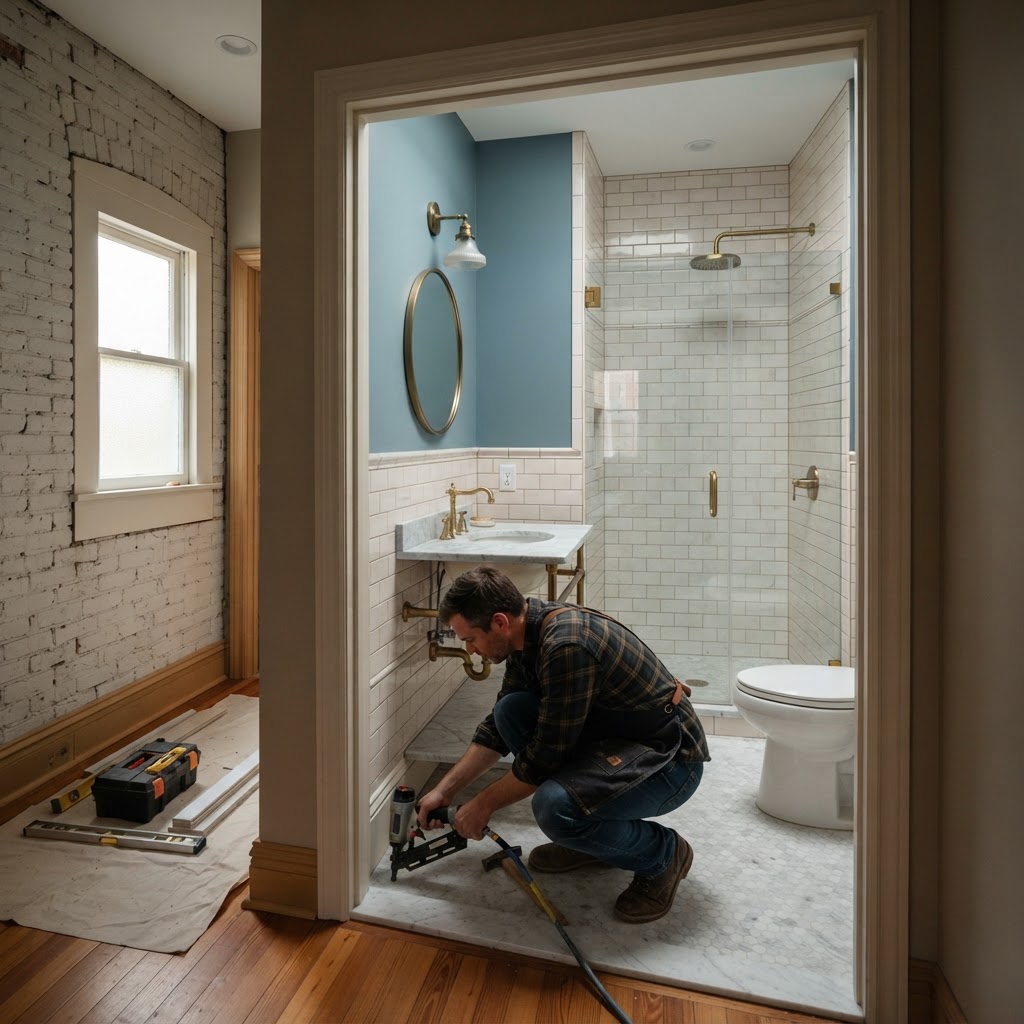
Why Baltimore Rowhome Owners Are Adding Second Bathrooms
If you own a rowhome in Baltimore — whether it's a classic Federal Hill brick two-story, a Hampden rowhouse, or a Canton end-unit — you already know the charm these homes carry. You also know their limitations. Most Baltimore rowhomes were built between the 1880s and 1950s with a single bathroom, typically on the second floor, serving the entire household. As families grow, as remote work makes home life more intense, and as resale values climb in neighborhoods like Remington and Waverly, adding a second bathroom has become one of the most requested projects we handle.
This isn't a simple weekend project. But with the right planning, the right contractor, and a realistic budget, it's absolutely achievable — and the return on investment in Baltimore's current market makes it worth every dollar.
Understanding Your Rowhome's Structure Before You Plan Anything
Baltimore rowhomes are narrow — typically 12 to 16 feet wide — and they're built on shared party walls. That structural reality shapes everything about a bathroom addition. You're not working with a sprawling suburban colonial where you can carve out square footage from an oversized bedroom. Every decision has a ripple effect.
Before you sketch a single layout, you need to understand three things about your specific home:
- Where your existing drain stack runs. In most Baltimore rowhomes, the main soil stack runs vertically through the center or rear of the house. The closer your new bathroom is to that stack, the cheaper and simpler your plumbing will be.
- What your floor joists can support. Many rowhomes have original 2x8 or 2x10 joists, which are generally adequate, but tile, mortar beds, and cast iron tubs add significant weight. A structural assessment matters.
- Whether your home has a basement. Most Baltimore City rowhomes do. That basement access is a major advantage — it allows plumbers to run new drain lines without tearing up finished floors throughout the house.
The Most Common Locations for a Second Bathroom
Converting a Basement Space
This is the most cost-effective option for most Baltimore rowhome owners. Basement bathrooms benefit from gravity-fed drainage in many configurations, and the concrete floor makes it easier to cut in new drain lines. The tradeoff is that basements in Baltimore are notorious for moisture issues. Our climate brings humid summers and wet winters, and many rowhomes in neighborhoods like Pigtown or Reservoir Hill have basements that have seen some water intrusion over the decades. Before you frame a single wall down there, you need to address waterproofing — not after the bathroom is built.
A basement half-bath (toilet and sink only) can often be completed for $8,000 to $15,000 depending on existing conditions. A full bath with a shower adds $5,000 to $10,000 more, especially if you need an ejector pump system because your drain lines sit below the city sewer connection.
Carving Space from an Upstairs Bedroom
In a two-bedroom rowhome, this is a harder sell. But in a three-bedroom home, borrowing 35 to 50 square feet from the largest bedroom to create a primary en suite is a project we do regularly. The plumbing challenge here is routing supply and drain lines up through interior walls and across floor cavities without destroying ceilings on the floor below. Experienced plumbers who know Baltimore rowhome construction can often thread lines through existing chases and wall cavities with minimal demolition.
First-Floor Powder Room Addition
Many Baltimore rowhomes have no bathroom on the main living level. Adding a powder room — just a toilet and small vanity — near the rear of the home, adjacent to the kitchen, is a project that improves daily livability dramatically and is a strong selling point. Rough-in costs are manageable because you're close to the basement stack, and the footprint required is small: as little as 18 square feet meets Maryland code minimums for a half-bath.
Permits and Baltimore City Code Requirements
Let me be direct: any bathroom addition in Baltimore City requires permits. This is not optional, and it's not bureaucratic nonsense — it protects you. Unpermitted bathroom work is one of the most common issues that surfaces during home sales in this city, and it can kill a closing or force expensive remediation.
In Baltimore City, you'll need a building permit for the structural and finish work and a plumbing permit pulled by a licensed Maryland plumber. Electrical work — which includes GFCI outlets, exhaust fans, and lighting — requires an electrical permit as well. Your contractor should be pulling all of these, not asking you to handle it yourself.
As an MHIC-licensed contractor, I pull every permit required for every job. If a contractor tells you permits aren't necessary for a bathroom addition, walk away. That advice will cost you far more than the permit fees ever would.
Baltimore City DHCD (Department of Housing and Community Development) typically turns around residential permit applications within two to four weeks for straightforward bathroom projects. Factor that into your timeline.
Plumbing Realities in Older Baltimore Homes
Rowhomes built before 1960 often have original cast iron drain lines and galvanized steel supply pipes. When we open walls for a new bathroom, we frequently find that sections of that old plumbing need to be updated. This isn't a contractor upselling you — corroded galvanized pipe restricts water flow and can fail inside finished walls, and compromised cast iron joints are a sewage problem waiting to happen.
Budget for the possibility that your plumber will recommend replacing a section of supply line with copper or PEX, or re-lining a portion of your drain stack. In a rowhome that hasn't had plumbing work in 40 years, this is common. Typical costs for these ancillary replacements run $500 to $2,500 depending on scope.
Ventilation: Don't Skip This Step
Maryland's humid climate makes bathroom ventilation non-negotiable. Interior bathrooms — which are extremely common in rowhomes given the narrow floor plans — have no exterior window. Baltimore's summers push humidity levels that will destroy drywall, grow mold behind tile, and rot framing if your exhaust fan is undersized or improperly vented.
Maryland residential code requires mechanical ventilation for bathrooms without operable windows. That fan must vent to the exterior — not into an attic, not into a wall cavity. In a rowhome, that often means running ductwork vertically to the roof or horizontally through a rear wall. An inline fan with a longer duct run will maintain adequate CFM where a standard box fan would struggle. Specify at least 110 CFM for a full bath and use insulated duct in any unheated spaces to prevent condensation.
Realistic Budget Ranges for Baltimore Rowhomes
- Basement half-bath (new addition): $8,000 – $15,000
- Basement full bath with shower: $15,000 – $28,000
- First-floor powder room: $7,000 – $14,000
- Upstairs en suite carved from bedroom: $18,000 – $35,000
These ranges reflect Baltimore labor rates and material costs as of 2024. They assume no major surprises in existing plumbing or structure. Homes with knob-and-tube wiring, extensive mold remediation needs, or structural concerns will see higher numbers.
What to Ask Your Contractor Before Signing Anything
- Are you MHIC licensed? (Verify at dllr.state.md.us)
- Will you pull all required permits?
- Who is your licensed plumber, and are they separately licensed in Maryland?
- How do you handle discoveries of old or damaged plumbing once walls are open?
- What is your timeline, and is it written into the contract?
Adding a second bathroom to your Baltimore rowhome is one of the highest-value improvements you can make to the property. Do it right, do it permitted, and do it with a contractor who knows these houses. The narrow footprints, the shared walls, the aging systems — none of it is insurmountable when you have experience working specifically in Baltimore's historic housing stock.