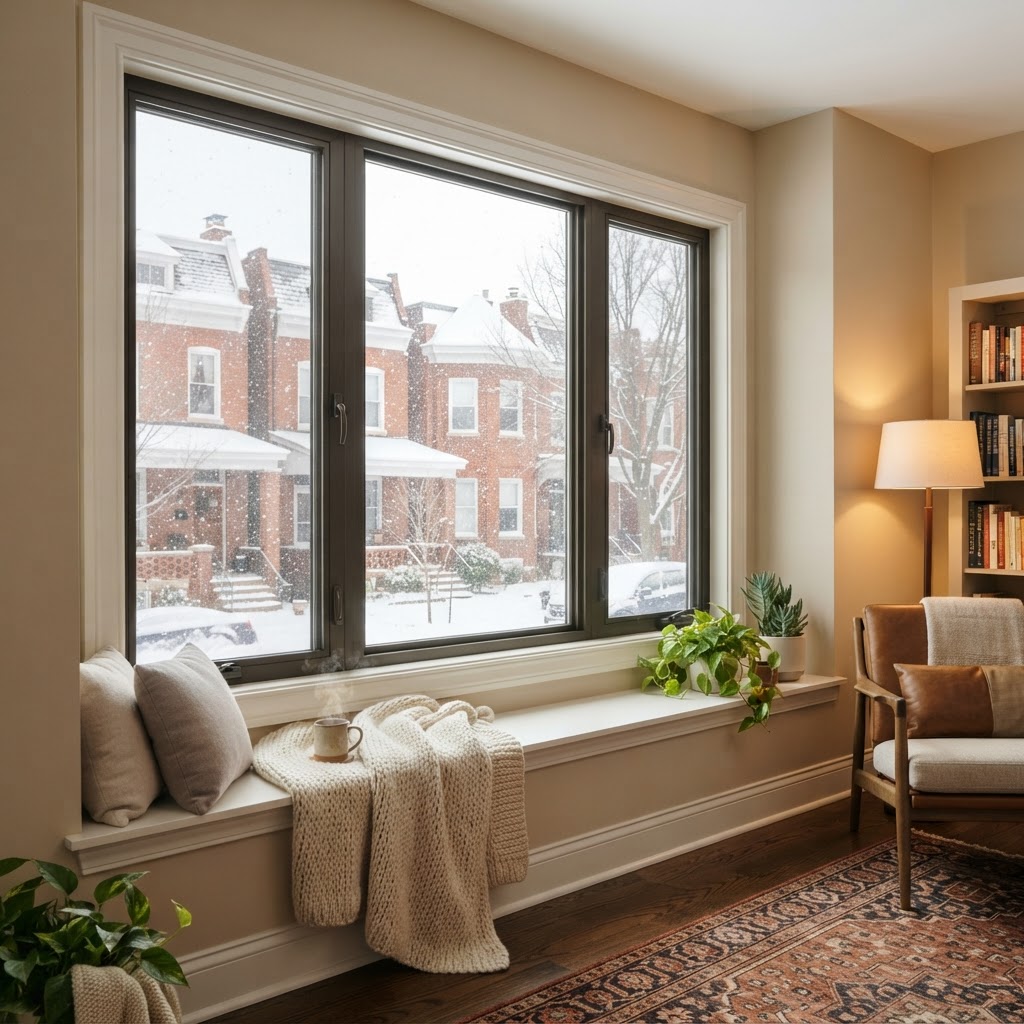
Why Baltimore Winters Demand Better Windows
Baltimore sits in a climate zone that doesn't get enough credit for how punishing it can be. We're not Minneapolis, but we're not Charlotte either. From December through February, overnight temperatures regularly drop into the teens and low twenties, and that damp Chesapeake air makes 28 degrees feel like 18. If your windows are more than 15 years old, there's a strong chance they're quietly draining your heating budget every single night.
As a contractor who has worked on hundreds of Baltimore rowhomes, Towson colonials, and Annapolis Cape Cods, I can tell you that window replacement is one of the highest-impact improvements a homeowner can make before winter arrives. The challenge is knowing what to buy, what to avoid, and what actually matters for our specific climate.
Understanding Window Performance Ratings
Before you talk to a single window salesperson, you need to understand two numbers: U-factor and Solar Heat Gain Coefficient (SHGC). These are the metrics that actually tell you how a window performs in real conditions.
U-Factor
The U-factor measures how quickly a window transfers heat from inside your warm home to the cold outside air. The lower the number, the better the insulation. For Baltimore's climate (IECC Zone 4), look for windows with a U-factor of 0.30 or lower. Many budget windows sit around 0.35 to 0.45, which sounds close but represents a meaningful difference in heat loss over a five-month heating season.
Solar Heat Gain Coefficient
SHGC measures how much solar radiation passes through the glass. In a hot Southern climate, you want a low SHGC to block summer heat. In Baltimore, the calculus is more nuanced. For south-facing windows, a moderate SHGC between 0.25 and 0.40 can actually help you capture free passive solar heat on sunny winter days. For north-facing windows, prioritize a low U-factor over SHGC, since those windows never see direct sun anyway.
The Best Window Types for Baltimore Homes
Not every window style is equally appropriate for every home. Baltimore's housing stock is diverse, and the right window for a Federal Hill rowhome is not necessarily the right window for a 1980s colonial in Lutherville.
Double-Hung Windows
Double-hung windows are the workhorse of Baltimore residential construction and fit naturally in both historic rowhomes and suburban colonials. Modern double-hung windows with double-pane or triple-pane glass and low-e coatings perform very well in our climate. Look for tilt-in sashes, which make cleaning the exterior glass from inside a second-floor bedroom genuinely safe and practical.
Casement Windows
Casement windows, which crank open on a hinge, actually seal more tightly than double-hung windows when closed because the sash presses firmly against the frame. If maximum air infiltration resistance is your priority — particularly on the north and west sides of your home where winter wind comes from — casements are worth the slightly higher cost.
Triple-Pane Glass: Worth It in Baltimore?
Triple-pane windows are standard in Scandinavia and Canada, but in Baltimore they represent a case of diminishing returns for most homeowners. The performance jump from single-pane to double-pane is dramatic. The jump from double-pane to triple-pane is real but modest, and the cost increase is typically 20 to 30 percent. My recommendation for most Baltimore homes: invest in high-quality double-pane windows with a strong low-e coating rather than paying a premium for triple-pane. The exception would be a home with large north-facing windows directly exposed to prevailing winter winds.
Low-E Coatings and Gas Fills Explained
Low-emissivity (low-e) coatings are microscopically thin metallic layers applied to the glass surface. They reflect infrared heat back into your home rather than letting it escape through the glass. For Baltimore winters, a hard-coat or soft-coat low-e glass with argon gas fill between the panes is the practical sweet spot. Argon is denser than air, which slows conductive heat transfer between the panes. Krypton gas performs slightly better but costs considerably more and is rarely necessary in Zone 4.
"The single biggest performance upgrade in any window is the glass package — the combination of low-e coating, gas fill, and number of panes. Frame material matters, but it's the glass doing the heavy lifting against a Baltimore January."
Frame Materials: What Holds Up in Maryland
Frame material affects both insulation and longevity. Each material has genuine trade-offs in our mid-Atlantic climate.
- Vinyl (uPVC): The most popular choice for replacement windows in Maryland. Vinyl frames don't rot, don't need painting, and provide good thermal resistance. Quality varies enormously by brand and wall thickness. Avoid thin, hollow vinyl frames from big-box stores.
- Fiberglass: Stronger and more dimensionally stable than vinyl, meaning fiberglass expands and contracts less during Baltimore's temperature swings from July heat to January cold. Premium cost, but excellent longevity. Worth considering for large picture windows or custom sizes.
- Wood with aluminum cladding: Traditional and beautiful, particularly appropriate for historic rowhomes in neighborhoods like Hampden, Guilford, or Roland Park where maintaining architectural character matters. The aluminum exterior cladding protects the wood from moisture. Higher maintenance cost than vinyl but often required by local historic preservation guidelines.
- Aluminum: Poor thermal performance due to metal's conductivity. Not recommended for Baltimore homes unless thermally broken frames are specified. Mostly limited to commercial applications.
Rowhome Considerations: Baltimore's Unique Challenge
Baltimore rowhomes present specific challenges that suburban homes don't. Most are 100 to 150 years old, with window openings that are not standard sizes. Custom or semi-custom sizing is frequently required, which adds cost. Additionally, many rowhomes in historic districts fall under Baltimore City's historic preservation review process, which may restrict replacement window profiles, materials, or glass appearance.
Before ordering windows for a rowhome in a designated historic district, contact Baltimore City's Commission for Historical and Architectural Preservation (CHAP). A contractor who tells you this step isn't necessary is a contractor you should walk away from. Fines and mandatory restoration to original windows are real consequences.
On the practical side, rowhome residents benefit enormously from addressing the front and rear windows first. Party walls shared with neighbors on both sides significantly reduce heat loss through those walls, so your thermal vulnerability is concentrated at the front facade and rear addition — exactly where windows are most prominent.
Maryland Energy Efficiency Incentives
Homeowners replacing windows with ENERGY STAR certified products may qualify for federal tax credits under the Inflation Reduction Act. As of current guidelines, you can claim 30 percent of the project cost, up to $600 per year for windows and skylights meeting applicable efficiency requirements. BGE and Pepco customers should also check current utility rebate programs, which periodically offer incentives for qualified energy improvements.
Keep your manufacturer's certification statements and your contractor's itemized invoice. You will need both when filing with your tax preparer.
What to Ask Your Window Contractor
When you're getting quotes, these are the questions that separate informed homeowners from easy marks:
- What is the U-factor and SHGC of the specific window you're quoting?
- Is the window ENERGY STAR certified for the Northern or North-Central climate zone?
- What is the warranty, and who services it — the manufacturer or your company?
- Are you licensed with the Maryland Home Improvement Commission (MHIC)?
- Will you pull a permit if one is required by my municipality?
Any contractor who can't answer the first two questions confidently is not the right contractor for this job. Window replacement in Maryland requires an MHIC license — verify any contractor's license number at the Maryland Department of Labor's online lookup tool before signing anything.
The Bottom Line for Baltimore Homeowners
Energy-efficient windows are not a luxury upgrade in Baltimore — they're a practical defense against a climate that demands it. Focus on a U-factor at or below 0.30, a reputable double-pane low-e glass package with argon fill, and a frame material appropriate to your home's age and architectural context. Address historic preservation requirements early, take advantage of available tax credits, and hire a licensed contractor who can demonstrate specific knowledge of the products they're installing.
Done right, quality window replacement reduces heating costs, eliminates cold drafts near glass on January nights, and can meaningfully extend the comfort and value of your home for twenty years or more.