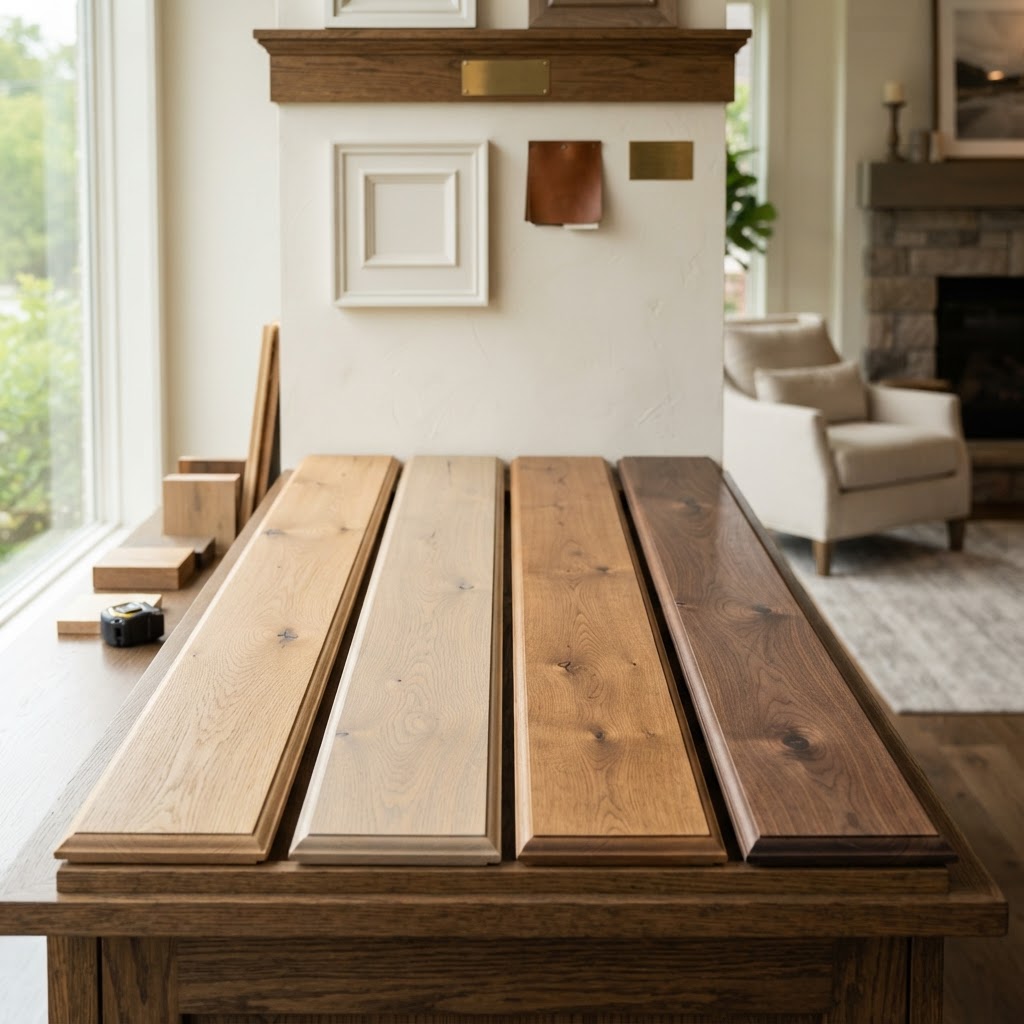
Why Maryland's Climate Makes Hardwood Flooring Selection Critical
Maryland sits squarely in the Mid-Atlantic climate zone, which means homeowners face a challenging combination of hot, humid summers and cold, dry winters. In Baltimore, average summer humidity regularly climbs above 70%, while January indoor air can drop to relative humidity levels below 30% when heating systems run full blast. That 40-point swing in moisture levels is the single biggest enemy of hardwood flooring — and it's something I see cause premature floor failures every year when homeowners choose the wrong product or installation method.
Whether you own a Federal-style rowhouse in Hampden, a colonial in Ellicott City, or a craftsman bungalow in Annapolis, the principles are the same: wood moves with moisture, and your floor needs to be selected and installed with that reality front and center. This article will walk you through the species choices, construction types, and practical installation decisions that separate a floor that lasts 50 years from one that starts cupping and gapping within two seasons.
Understanding Wood Movement in a Maryland Context
All wood expands when it absorbs moisture and contracts when it dries out. The technical term is dimensional movement, and it varies significantly by species and cut. In Maryland's climate, you can reasonably expect your indoor relative humidity to swing between roughly 25% in winter and 65% in summer — even with a well-maintained HVAC system. That's a substantial range.
Here's a practical rule of thumb I share with every homeowner I work with:
Keep your home's interior humidity between 35% and 55% year-round, and you'll eliminate the majority of hardwood flooring problems before they start. A whole-home humidifier connected to your furnace is one of the best investments a Maryland homeowner can make alongside new hardwood floors.
Wider planks move more than narrower ones. Flatsawn lumber moves more than quartersawn. Ring-porous species like oak behave differently than diffuse-porous species like maple. These distinctions matter when you're choosing a floor that will live through Maryland summers.
Best Hardwood Species for Maryland Homes
Red Oak and White Oak
Oak remains the most popular hardwood floor species in Maryland for good reason. It's widely available, accepts stain well, and performs reliably in our climate. White oak has become particularly popular in the last decade because its tighter grain and natural ray fleck give it a more refined appearance, and it accepts the gray and whitewashed stains that dominate current design trends. White oak also has slightly better moisture resistance than red oak due to its tyloses-filled pores.
In Baltimore rowhouses, where older homes often already have red oak strip flooring under carpet, matching new red oak to existing floors is a common and cost-effective renovation strategy. The species is forgiving, durable, and widely stocked by local suppliers.
Hickory
Hickory is the hardest domestically available flooring species, rating 1820 on the Janka hardness scale compared to red oak's 1290. For households with large dogs, heavy foot traffic, or young children, hickory is an excellent choice. Its bold, contrasting grain pattern suits the character of older Maryland homes and farmhouses in Carroll or Frederick County. The trade-off is that hickory's hardness makes it harder to sand and refinish, so professional installation and finishing are strongly recommended.
American Walnut
Walnut's rich chocolate tones and straight grain make it a favorite in higher-end suburban colonials and new construction in communities like Columbia or Bethesda. It's softer than oak (1010 Janka), which means it shows dents more readily — something to consider if you have pets or active kids. However, its natural oils give it reasonable moisture resistance, and when properly finished, walnut performs well in conditioned Maryland interiors.
Engineered Hardwood: A Practical Alternative
I want to address engineered hardwood directly, because there's still a persistent myth that it's a lesser product. A high-quality engineered hardwood — one with a real hardwood veneer of at least 3mm over a cross-ply plywood core — can be sanded and refinished at least once or twice and will outperform solid hardwood in below-grade or slab-on-grade installations. For Maryland basement finishing projects, over radiant heat systems, or in the first-floor open plans common in suburban colonials, engineered hardwood is often the smarter technical choice, not a compromise.
Avoid cheap engineered products with veneer layers under 2mm — those cannot be refinished and are essentially a disposable product dressed up to look like real wood.
Width, Cut, and Construction Considerations
In Maryland's climate, I generally advise residential clients to think carefully before installing wide-plank solid hardwood — anything over 5 inches — without very careful humidity control. Wide planks are stunning in historic properties and high-end renovations, but they require more discipline from the homeowner around maintaining consistent interior humidity. If your HVAC system is aging or inconsistent, stick with 3¼-inch or 4-inch strips in solid hardwood.
- Quartersawn and rift-sawn flooring exhibits significantly less expansion and contraction than flatsawn, making it ideal for wider plank applications in Maryland homes.
- Strip flooring (2¼" to 3¼") is the most stable solid hardwood option and suits the scale of Baltimore rowhomes and classic colonials alike.
- Engineered wide planks (5" to 7") give you the visual impact of wide-plank flooring with substantially better dimensional stability — the best of both worlds for Maryland conditions.
Finish Options That Hold Up in Maryland
The finish on your hardwood floor is its primary defense against moisture, traffic, and UV fading. In my experience installing and refinishing floors across Maryland for over a decade, here's how the main finish categories compare:
- Oil-modified polyurethane — The workhorse finish. Amber tone deepens wood color attractively. Long cure time (24–48 hours between coats), but extremely durable. Good choice for kitchens and high-traffic areas in family homes.
- Water-based polyurethane — Lower VOCs, faster dry time, and a clearer finish that preserves the natural wood tone. Slightly less durable than oil-modified in heavy-traffic zones, but the difference is modest with quality products. Increasingly popular for white oak floors where homeowners want to avoid the amber cast.
- Hardwax oil finishes — Penetrating finishes that soak into the wood rather than forming a surface film. Beautiful, natural appearance and easy to spot-repair, but require more regular maintenance. Well-suited for homeowners who appreciate the character of a living finish and are committed to periodic upkeep.
Regardless of finish type, always request three coats minimum, with proper scuff sanding between coats. I see two-coat finishes fail prematurely on Maryland floors regularly — the third coat is not an upsell, it's a necessity.
Installation Best Practices for Maryland Homes
Acclimation is non-negotiable. Solid hardwood flooring should acclimate in the room where it will be installed for a minimum of five to seven days, with the home's HVAC system running at normal occupancy conditions. Skipping acclimation — something budget installers routinely do to move faster — is a primary cause of gapping in winter and crowning in summer.
For nail-down installations over the older subfloors common in Baltimore rowhouses and 1970s-era colonials, always check subfloor flatness (maximum 3/16-inch variation over a 10-foot span) and moisture levels before proceeding. I use a pin-type moisture meter on every subfloor before any hardwood installation, and I encourage homeowners to ask any contractor they're considering whether they do the same. If they look at you blankly, find someone else.
Finally, leave proper expansion gaps at all walls and fixed vertical surfaces — typically ¾ inch for solid hardwood. In Maryland's climate, that gap will close during humid summers and open during dry winters, exactly as designed. Cover it with appropriate base molding, and your floor will accommodate seasonal movement gracefully for decades.
Making the Right Investment for Your Maryland Home
Hardwood flooring is one of the few home improvements that consistently adds resale value and livability simultaneously. In a Maryland real estate market where buyers in Baltimore City, Howard County, and Anne Arundel County all respond positively to well-maintained hardwood, getting the selection and installation right is worth the extra thought and investment upfront.
Choose a species appropriate for your household's traffic and humidity management habits. Decide between solid and engineered based on your subfloor situation and budget for humidity control. Insist on proper acclimation, moisture testing, and a three-coat finish. And work with a licensed Maryland contractor — MHIC license required — who will stand behind the installation in writing.
Done right, a hardwood floor installed in a Maryland home today will still be beautiful and functional when the next generation of owners moves in.