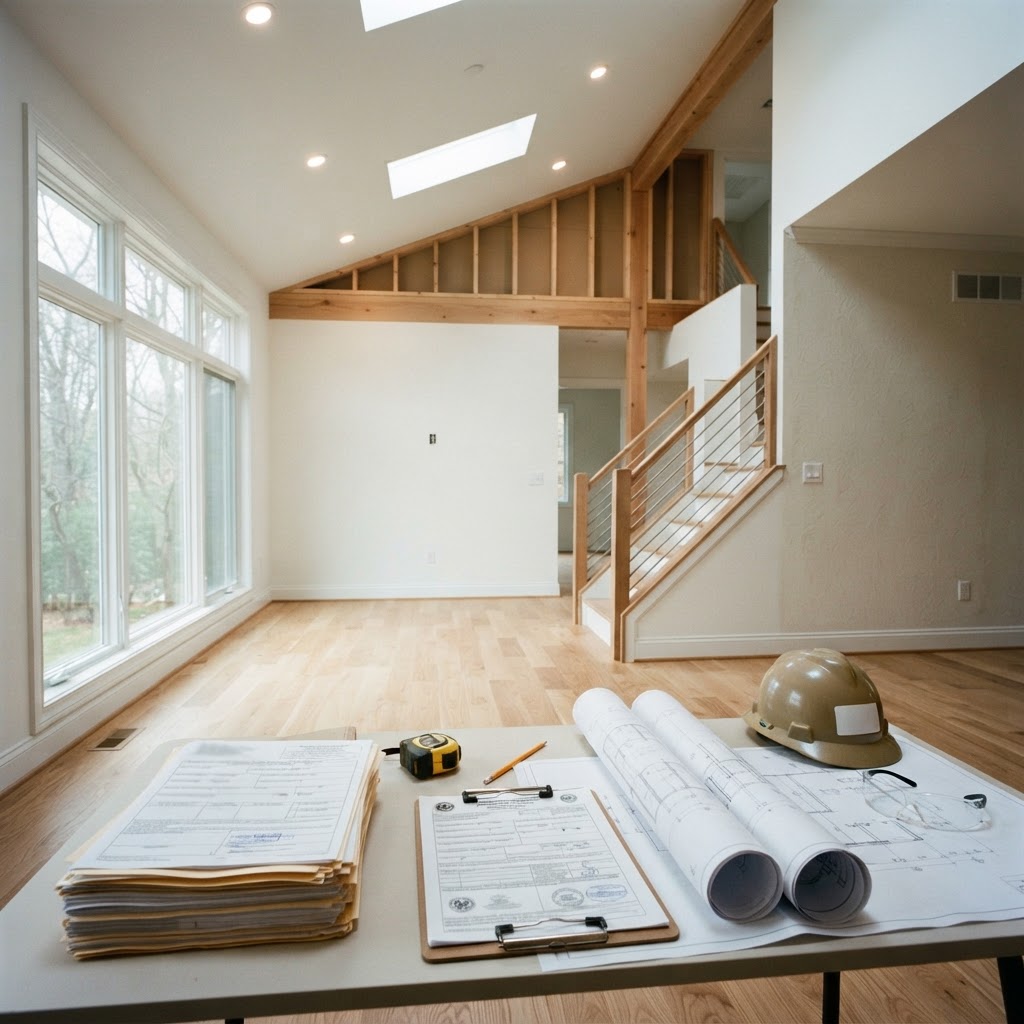
Why Permits Matter for Baltimore County Home Additions
If you're planning to add a room, expand a kitchen, or build a second story onto your home in Baltimore County, pulling the correct permits isn't optional — it's the law, and more importantly, it protects you. As a licensed Maryland contractor (MHIC #105430) who has built additions across Towson, Catonsville, Parkville, and Dundalk, I've seen what happens when homeowners skip this step. Unpermitted work can kill a home sale, void your homeowner's insurance, and force you to tear out work you paid good money to have done.
Baltimore County operates under its own Department of Permits, Approvals and Inspections (PAI), separate from Baltimore City. That distinction trips up a lot of homeowners who assume the rules are the same across the region. They are not. Understanding the local process before you break ground saves time, money, and serious headaches.
What Types of Additions Require a Permit in Baltimore County
Almost any structural addition to your home will require a building permit from Baltimore County PAI. This includes:
- Room additions — adding square footage to any level of your home
- Garage conversions — converting an attached or detached garage into living space
- Second-story additions — particularly common on Baltimore County ranchers and Cape Cods
- Sunrooms and four-season rooms — even if prefabricated, these require permits when attached to the structure
- Deck additions over 200 square feet or attached to the home's structure
- Bump-out additions — even a modest 4-foot kitchen bump-out requires review
If your addition involves electrical, plumbing, or HVAC work — and most do — separate trade permits are required in addition to the base building permit. Your general contractor should be coordinating all of these, not just pulling one permit and hoping for the best.
Understanding Baltimore County's Permit Application Process
Baltimore County has moved a significant portion of its permitting process online through its ePlans system, which allows contractors and homeowners to submit drawings, pay fees, and track reviews digitally. That said, the process still requires careful preparation.
What You'll Need to Submit
- Site plan — a scaled drawing showing your property lines, existing structure, and the proposed addition's footprint. This is used to verify zoning setbacks.
- Construction drawings — floor plans, elevations, and cross-sections prepared to Maryland Residential Code standards. For anything beyond a simple addition, a licensed architect or engineer should prepare these.
- Energy compliance documentation — Maryland follows the International Energy Conservation Code (IECC), and you'll need to show your addition meets current insulation, window, and air-sealing requirements.
- Structural calculations — required for second-story additions or any work that modifies load-bearing elements.
Baltimore County's PAI office can be reached at their Towson headquarters, and plan review times currently range from two to six weeks depending on project complexity and the time of year. Spring and early summer tend to be the busiest periods, so if you're hoping to start construction before the humid Maryland summer sets in, submit your application in late winter.
How Baltimore County's Climate Affects Addition Design and Code Requirements
Maryland sits in a mixed-humid climate zone (Zone 4A under IECC classification), which means your addition has to handle both hot, sticky summers and cold, occasionally brutal winters. Baltimore County homeowners often underestimate how much this climate demands from a building envelope.
Current Maryland code requires minimum insulation values of R-49 in ceilings, R-20 in above-grade walls, and R-19 in floors over unconditioned spaces for new additions. If you're tying a new addition into an older home — say, a 1960s colonial in Lutherville or a postwar cape in Essex — the transition between old and new construction must be carefully detailed to prevent thermal bridging, moisture intrusion, and ice damming on the roof line.
I've seen addition roofs in Baltimore County develop ice dams within two winters because the contractor didn't properly insulate and air-seal the connection between the existing attic and the new structure. Permits and inspections exist partly to catch these details before they become expensive problems.
Zoning Considerations for Common Baltimore County Home Styles
Baltimore County's residential zoning is diverse. You'll find DR (Density Residential) zoning in places like Towson and Pikesville, and more rural RC (Resource Conservation) zones in the county's northern reaches near Hereford. Your zoning classification determines your setbacks — how close your addition can come to property lines, easements, and the street.
Suburban Colonials and Ranchers
The postwar suburban boom left Baltimore County with thousands of brick colonials and single-story ranchers, particularly in communities like Catonsville, Randallstown, and Perry Hall. These homes typically sit on lots with 20- to 25-foot side setbacks and 25- to 35-foot rear setbacks, though this varies by zoning district. A rear addition on a colonial is often the most straightforward project — there's usually yard space to work with and the existing structure provides a clean connection point.
Rowhomes Near Baltimore City Borders
In communities like Dundalk, Arbutus, and parts of Lansdowne, you'll find rowhome-style construction that bleeds over from Baltimore City. These homes present unique challenges: narrow lots, party walls shared with neighbors, and minimal rear yards. Rear additions on rowhomes often require party wall agreements and careful structural analysis. Don't assume your contractor can just frame up against a shared wall without additional review.
How Much Does a Home Addition Permit Cost in Baltimore County?
Baltimore County permit fees are calculated based on the estimated construction value of your project. As of current fee schedules, you should budget roughly $8 to $15 per $1,000 of construction value for the base building permit, with additional fees for trade permits (electrical, plumbing, mechanical). A $150,000 room addition might carry total permit costs in the range of $1,500 to $2,500, not including any plan review or inspection fees.
Some homeowners try to lowball the declared construction value to reduce permit fees. This is a mistake. If an inspector or a future appraiser questions the declared value, you can face penalties, and your permit may be flagged during a home sale disclosure.
Practical Advice Before You Start
"The permit process isn't the enemy — it's the framework that keeps your investment protected. A good contractor welcomes inspections because it validates the quality of the work."
Here's what I tell every Baltimore County homeowner before we start an addition project:
- Verify your contractor's MHIC license before signing anything. Maryland law requires any contractor performing home improvement work over $500 to be licensed. You can verify licenses at the Maryland Department of Labor website.
- Get a copy of the permit posted on site. Baltimore County requires the permit card to be visible during construction. If your contractor can't show you the permit, stop work immediately.
- Attend at least one inspection. Framing and rough-in inspections happen before walls are closed up. Being present gives you a chance to ask questions and understand what's been built inside your walls.
- Don't rush the Certificate of Occupancy. Your addition isn't legally habitable until the final inspection is passed and a CO or use-and-occupancy approval is issued. This matters for insurance coverage and for any future sale.
- Talk to your neighbors early if your addition is close to property lines or will involve significant excavation. A survey may be required, and proactive communication prevents disputes.
Working With Baltimore County PAI
The Baltimore County PAI staff are generally knowledgeable and responsive, but like any government office, they operate on their own timeline. Build permit review time into your project schedule from day one. If your contractor promises you'll break ground in two weeks without a permit in hand, find a different contractor.
For complex projects — additions with structural modifications, properties in flood zones (check FEMA maps for areas near the Patapsco River or Back River watersheds), or homes in historic overlay districts — budget additional review time and consider hiring a permit expediter or working with an architect who has an established relationship with county reviewers.
A home addition is one of the best investments you can make in Baltimore County's solid residential market. Done right, with proper permits and quality construction, it adds lasting value and livability to your home. Done wrong, it becomes a liability that follows the property forever. Take the permit process seriously, hire licensed professionals, and build it once — the right way.