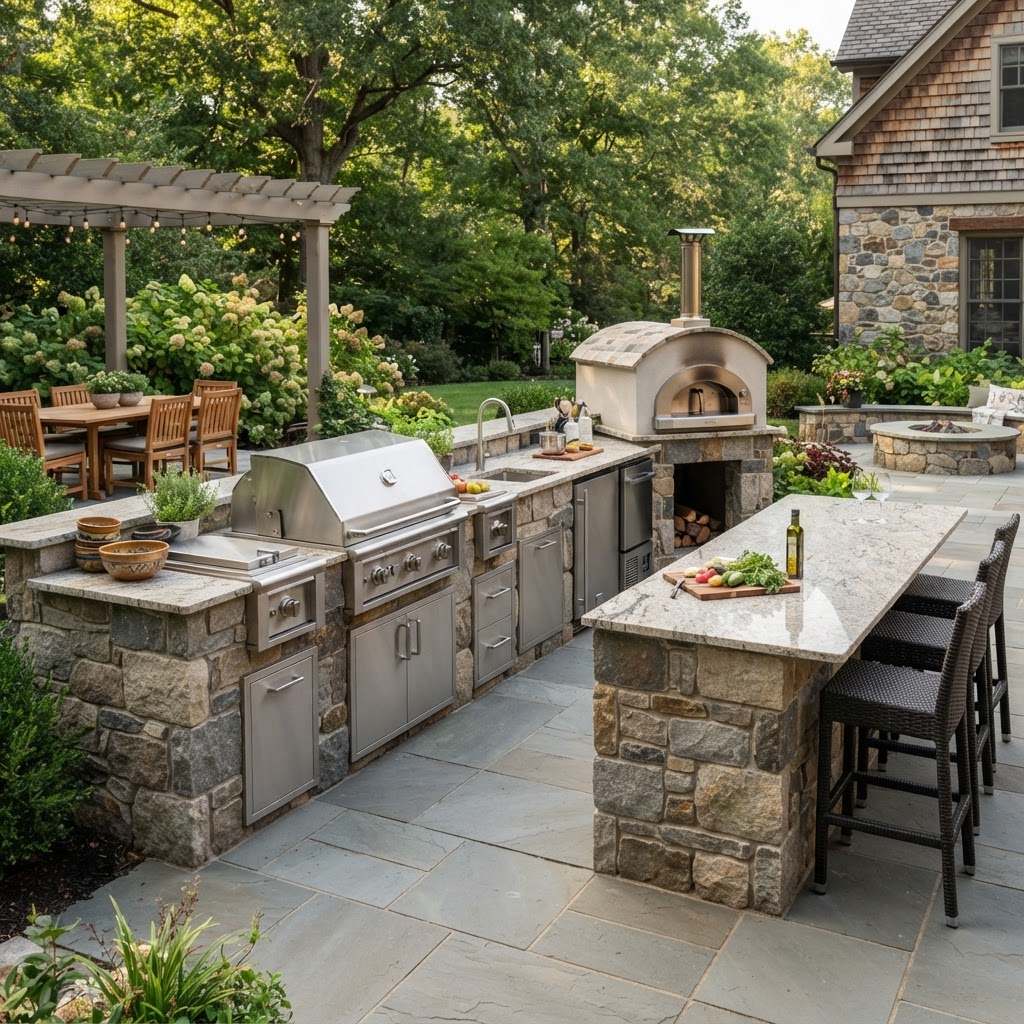
Why Maryland Backyards Are Perfect for Outdoor Kitchens
Maryland sits in a unique climate sweet spot — hot, humid summers, crisp falls, and winters that range from mild to brutally cold depending on whether you're in Ocean City or Garrett County. That range of conditions makes outdoor kitchen design more nuanced here than in, say, Arizona or Florida. But it also means Maryland homeowners can realistically enjoy an outdoor kitchen for seven to eight months a year, and with the right design choices, that season can stretch even further.
As a licensed Maryland Home Improvement Contractor (MHIC #105430), I've designed and built outdoor kitchens across the state — from tight Baltimore rowhome courtyards in Hampden to sprawling suburban lots in Ellicott City and waterfront properties on the Eastern Shore. Every project teaches something new about matching design to property, lifestyle, and the realities of Maryland weather. This guide distills those lessons into practical advice you can use right now.
Understanding Maryland's Climate Challenges
Before you pick a grill or a countertop material, you need to respect what Maryland weather will do to your investment. The state averages around 41 inches of rain annually, with humidity levels that can make a Philadelphia resident feel at home. Summers regularly push into the 90s with humidity indexes that feel far hotter. Winters bring freeze-thaw cycles that are particularly punishing on porous materials like natural stone and unsealed concrete.
What does this mean practically? It means:
- Porous countertop materials like unsealed marble or limestone will not survive Maryland winters. Stick with porcelain, quartzite, or granite that has been properly sealed annually.
- Wood cabinetry is almost always a mistake outdoors in Maryland. Even pressure-treated wood will warp, swell, and rot faster than you expect in our humidity. HDPE polymer or stainless steel cabinet frames are the standard for a reason.
- Cover your outdoor kitchen. A pergola with a polycarbonate roof, a solid covered porch, or at minimum a motorized awning extends your season and protects your investment dramatically.
- Plan for drainage. Maryland's rainfall intensity during summer thunderstorms is no joke. Poor grading around your outdoor kitchen pad will result in flooding, cracked pavers, and foundation issues near the home.
Designing for Your Maryland Home Style
Baltimore Rowhomes and Urban Courtyard Kitchens
If you own a rowhome in Baltimore neighborhoods like Fells Point, Canton, Remington, or Charles Village, your outdoor space is likely a rear courtyard measuring somewhere between 200 and 600 square feet. The instinct is to think you don't have enough room for a real outdoor kitchen. That instinct is wrong.
Compact linear kitchen designs — a single run of cabinetry along one wall — can fit in as little as 10 linear feet and still include a built-in grill, a side burner, a small refrigerator, and a prep sink. In urban courtyards, vertical space matters enormously. A well-designed pergola with string lighting and a ceiling fan doubles the usability of the space and creates the kind of alfresco dining atmosphere that these older brick-and-character neighborhoods are perfectly suited for.
In these settings, we almost always specify a natural gas connection over propane. Baltimore's row home neighborhoods have solid gas infrastructure, and avoiding propane tank management in a tight courtyard is both practical and safer.
Suburban Colonials and Split-Levels in the MD/DC Corridor
Homes in communities like Columbia, Gaithersburg, Bowie, and Laurel tend to offer more square footage to work with, but they come with their own constraints: HOA rules, setback requirements, and the challenge of integrating a new outdoor kitchen with an existing deck or patio that may not have been built with this in mind.
For colonial-style homes with traditional brick or vinyl siding exteriors, I typically recommend an L-shaped or U-shaped outdoor kitchen layout centered on a covered porch or adjacent to an existing deck. Material choices should complement the home's existing exterior — if you have red brick, consider a complementary stone veneer on the kitchen island. If you have a more contemporary vinyl or fiber cement exterior, sleek concrete block with a stucco finish or porcelain tile panels look sharp and hold up well.
One critical piece of advice for homeowners in planned communities: pull your HOA documents before you spend a dime on design. Many Maryland HOAs restrict permanent structures, gas line extensions, or specific materials. Getting a variance or approval before you build saves enormous headaches and potential fines.
Eastern Shore and Waterfront Properties
Waterfront homes along the Chesapeake Bay, the Miles River, or the Magothy present a specific design challenge: salt air accelerates corrosion dramatically. Standard stainless steel appliances rated for residential use will show surface rust within a season in these environments. Specify marine-grade 316 stainless steel for any appliances or hardware near tidal water, and plan to rinse and dry surfaces after use during high-humidity stretches.
These properties also benefit enormously from integrated outdoor kitchens that face the water, making view orientation a primary design driver rather than an afterthought.
The Core Components of a Well-Built Maryland Outdoor Kitchen
The Grill
Your grill is the centerpiece. In Maryland, where we take our grilling seriously — pit beef, crabs, Old Bay everything — don't underinvest here. A built-in grill from a reputable brand like Lynx, Blaze, or Napoleon in the 36- to 42-inch range will serve most families well. If you entertain frequently, consider adding a dedicated charcoal drawer or a kamado-style cooker as a secondary cooking station.
Refrigeration
An outdoor-rated refrigerator is non-negotiable for Maryland summers. Units that aren't rated for high ambient temperatures will fail rapidly. Look for models specifically rated to operate in ambient temperatures up to 109°F, and site the refrigerator out of direct afternoon sun whenever possible.
Prep and Storage
Adequate counter space — at minimum 24 inches on each side of the grill — transforms cooking comfort. For storage, closed cabinetry with locking doors keeps pests out, a significant consideration given Maryland's proximity to wooded areas and the critter pressure that comes with it.
Utilities: Gas, Water, and Electrical
Running utilities correctly requires licensed contractors and proper permits. In Maryland, gas line extensions require a licensed plumber and inspection. Electrical work must be performed by a licensed electrician and must meet NEC outdoor requirements, including GFCI protection on all receptacles. Do not cut corners here — insurance claims related to improperly installed outdoor utilities are routinely denied.
Contractor's Note: Always pull permits for outdoor kitchen construction in Maryland. Montgomery, Howard, and Baltimore Counties all actively enforce unpermitted structure rules, and an unpermitted outdoor kitchen can complicate your homeowner's insurance and your home sale down the road.
Budgeting Realistically for a Maryland Outdoor Kitchen
Homeowners consistently underestimate project costs when they price appliances alone. A realistic budget breakdown for a mid-range Maryland outdoor kitchen looks something like this:
- Basic setup (grill, small counter, no utilities): $8,000–$15,000
- Mid-range fully equipped kitchen with gas, sink, and refrigeration: $20,000–$45,000
- Premium custom build with covered structure, lighting, and full appliance suite: $55,000–$100,000+
These ranges reflect current Maryland labor and material costs. The investment typically returns 50–80% at resale in strong Maryland markets, and more importantly, it delivers daily use and enjoyment for years.
Final Advice Before You Break Ground
Work with a contractor who knows Maryland specifically — local building departments, local material suppliers, and local weather patterns. Ask for references from completed outdoor kitchen projects, and visit those projects if at all possible. Verify your contractor's MHIC license at the Maryland Department of Labor website before signing any contract.
A well-designed outdoor kitchen built to Maryland's climate realities will become one of the most-used spaces in your home. Build it right the first time, and you'll be cooking outdoors from the first warm days of April straight through Thanksgiving.