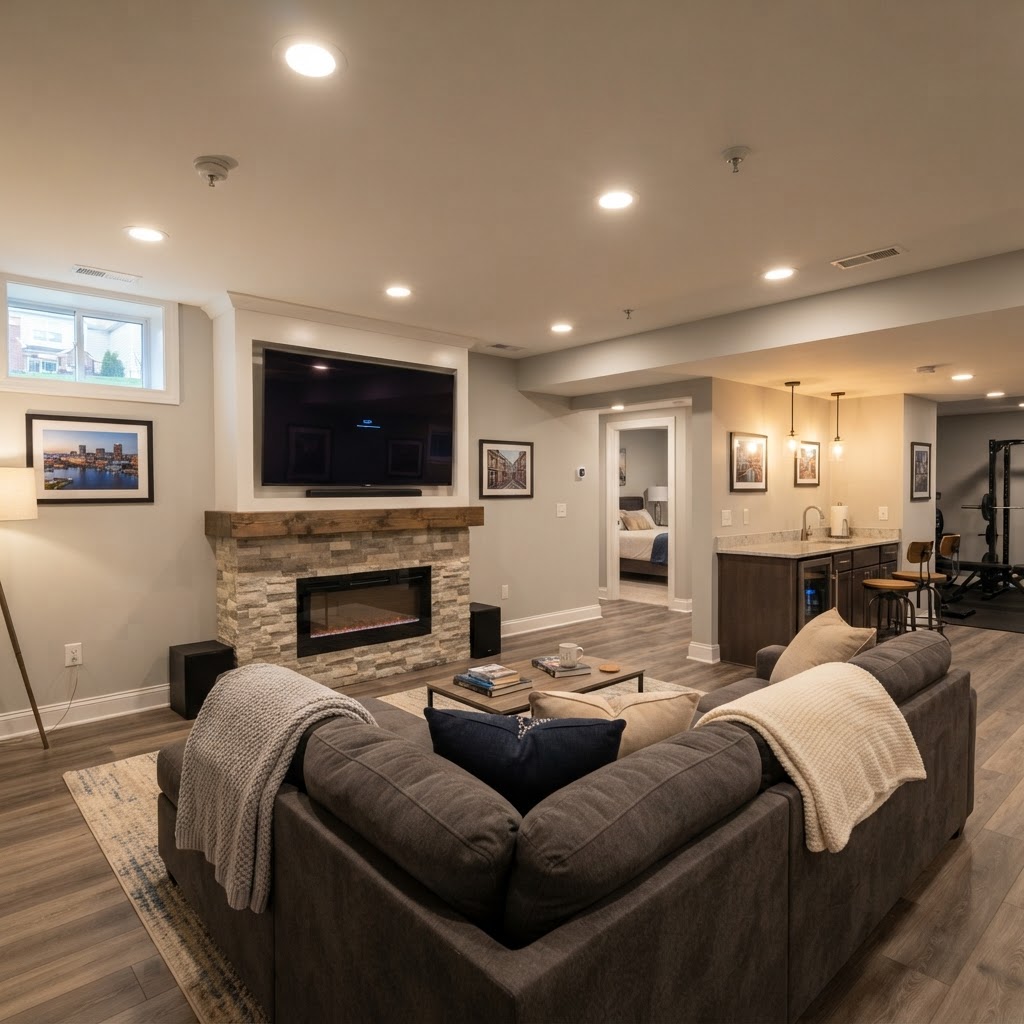
Hiring a basement renovation contractor in Baltimore comes down to a few core checks: confirm Maryland licensing and insurance, define your scope before requesting bids, compare estimates line by line rather than by total price, and clarify who handles moisture, permits, and inspections before work begins. Baltimore-area basements present particular challenges, from older rowhome foundations to varying water tables across the city and county, so a contractor's relevant experience matters as much as their paperwork. This guide walks through what to verify, how to compare proposals, and what to prepare before your first consultation.
What to Check Before Hiring a Baltimore Basement Contractor
Before you invite contractors to walk your basement, it helps to know what separates a straightforward bid from a problematic one. At minimum, confirm the following for any company you're considering:
- Active Maryland Home Improvement Commission (MHIC) license status
- Current general liability insurance and workers' compensation coverage
- Experience with basement-specific conditions, including moisture control, egress, and ceiling height limitations
- A written process for permits, inspections, and change orders
- References or examples of comparable basement projects, ideally in similar housing stock
Many homeowners focus almost entirely on price when comparing contractors, but basements are not a one-size-fits-all project. A finished basement in a newer home with standard ceiling height and no water history is a different undertaking than a basement in an older rowhome with low clearance, an aging foundation, or a history of seasonal dampness. The contractor's familiarity with these variables should factor into your decision as much as their estimate total.
Verify Maryland Licensing, Insurance, and Relevant Experience
Any contractor performing home improvement work in Maryland, including basement finishing, is required to hold a valid MHIC license. Before signing anything, verify the contractor's license directly through the Maryland Home Improvement Commission rather than relying solely on what's printed on a business card or website. Confirm that the business name on the license matches the entity you're contracting with, and ask the contractor to provide proof of insurance separately, since license status and insurance coverage are not the same thing.
Beyond licensing, ask specifically about basement experience. A contractor who primarily handles kitchen or bathroom remodels may be competent in general construction but less familiar with basement-specific concerns like vapor barriers, sump pump integration, insulation strategies for below-grade walls, or framing around mechanical systems. Ask how many basement projects they've completed in the past year, whether they've worked in similar home types, and how they typically approach moisture assessment before finishing begins.
Define Your Basement Finishing Scope Before Requesting Estimates
One of the most common reasons basement estimates vary widely isn't contractor markup, it's scope ambiguity. Before you contact multiple companies, take time to outline what you actually want:
- Intended use of the space (family room, bedroom, home office, bathroom, wet bar)
- Desired flooring, wall finishes, and ceiling treatment
- Electrical needs, including lighting, outlets, and any specialty circuits
- Whether a bathroom or additional plumbing is part of the plan
- Storage, closet, or utility access requirements
Providing the same scope description to each contractor you contact is the single most effective way to get comparable estimates. If one contractor is pricing a basic finished space with painted drywall and basic flooring, and another assumes a bathroom addition and custom built-ins, the numbers will look wildly different for reasons that have nothing to do with their skill or pricing fairness. If you're still working through layout decisions, resources like the guide to planning a basement finishing project in Anne Arundel County can help you think through common design and planning questions that apply broadly across the region, even if your property sits in a different jurisdiction.
Compare Estimates for Scope, Allowances, and Exclusions
Once you have a defined scope, request itemized estimates rather than lump-sum quotes. A well-structured basement renovation estimate should include:
- A clear description of included work, room by room if applicable
- Material and fixture allowances, so you know what grade of flooring, trim, or fixtures are assumed
- Labor costs separated from materials where possible
- Explicit exclusions, such as permit fees, electrical panel upgrades, or moisture remediation
- Payment schedule tied to project milestones
When two estimates differ substantially, ask each contractor to walk you through their numbers rather than assuming the higher bid is overpriced or the lower bid is a better deal. Sometimes a lower number reflects lower-grade materials or excluded work that will surface as a change order later. Other times a higher number reflects more thorough prep work, better materials, or a more complete scope. Our overview of basement finishing and remodeling services outlines the kinds of work typically involved in a full basement renovation, which can help you sanity-check whether an estimate's scope seems complete.
Ask How Moisture, Ceiling Height, and Egress Affect Feasibility
Basements in this region face conditions that don't apply to above-grade remodeling, and a qualified contractor should raise these issues proactively rather than waiting for you to ask:
- Moisture and water history: Ask whether the contractor will assess for past water intrusion, humidity levels, and drainage conditions before finishing begins. Enclosing walls over an unresolved moisture issue can lead to problems well after the project is complete.
- Ceiling height: Older homes sometimes have lower basement ceilings, which can limit flooring and ceiling finish options or require adjustments to mechanical layouts.
- Egress requirements: If you're considering a bedroom or habitable space, ask how egress window or door requirements factor into the design and whether the existing structure can accommodate them.
If moisture issues are identified, clarify who is responsible for remediation. Some contractors handle minor moisture control as part of the finishing scope, while more significant water intrusion may require a specialist to resolve the underlying issue before finish work can begin. Get this sequencing in writing so there's no confusion about timing or responsibility.
Clarify Permits, Inspections, and Project Responsibilities
Permit requirements for basement renovation work depend on your specific jurisdiction and the scope of work proposed. Baltimore City and Baltimore County operate under separate permitting authorities, and surrounding counties have their own processes as well. Rather than assuming permits aren't needed for interior work, ask your contractor directly which permits apply to your project and who is responsible for pulling them.
A transparent contractor will tell you upfront whether permit fees are included in their estimate or billed separately, and they should be comfortable scheduling required inspections as part of the project timeline. If a contractor suggests skipping permits to save time or money, treat that as a warning sign rather than a convenience, since unpermitted work can create complications later when selling the home or filing an insurance claim.
Review Contracts, Change Orders, and Payment Milestones
Before signing a contract, read through the payment schedule and change-order process carefully. A reasonable basement renovation contract should include:
- A detailed scope of work matching what was discussed and estimated
- Payment milestones tied to completed phases of work, not arbitrary dates
- A clear process for submitting and approving change orders, including how pricing for changes is determined
- Start and substantial completion expectations, with the understanding that timelines can shift due to permitting, inspections, or unforeseen conditions
- Warranty information for labor and materials
If anything in the contract seems vague, ask for clarification in writing before signing. Verbal assurances are difficult to enforce later, and a contractor confident in their work should have no issue documenting the details clearly.
Prepare for a Basement Remodeling Consultation
You'll get more useful information out of an in-home consultation if you come prepared. Before the contractor arrives, consider gathering:
- Any known history of water intrusion, flooding, or dampness in the space
- Photos or notes on areas of concern, such as cracks, staining, or musty odors
- A rough idea of your budget range and intended use for the finished space
- Questions about licensing, insurance, and past basement project experience
- Any existing floor plans, if available, even informal sketches
During the walkthrough, pay attention to how the contractor inspects the space. Are they checking for moisture signs, measuring ceiling height, and asking about mechanical systems, or are they moving quickly toward a price? A thorough on-site assessment is one of the clearest signals of a contractor who understands basement-specific challenges.
Frequently Asked Questions
How do I verify a Maryland basement remodeling contractor's license?
Search the Maryland Home Improvement Commission's official license lookup and confirm that the business name and license status match the contractor you are considering. Request evidence of insurance separately.
What should a basement renovation estimate include?
Look for a defined scope, materials and allowances, labor, exclusions, permit responsibilities, payment terms, and the process for approving changes. Compare these details rather than the total price alone.
Should moisture problems be addressed before finishing a basement?
Yes. Identify and resolve water intrusion or persistent moisture before enclosing walls or installing finishes. If specialist remediation is needed, clarify who will perform it and when finishing work can begin.
Does a Baltimore basement renovation require permits?
Permit requirements depend on the property jurisdiction and proposed work. Baltimore City and Baltimore County have separate authorities; confirm applicable building and trade permits before work starts.
How can I compare basement remodeling bids fairly?
Give each contractor the same proposed layout and finish requirements, then compare included work, allowances, exclusions, permit responsibilities, and change-order terms. Ask contractors to explain substantial differences.
If you're weighing your options for a basement renovation and want a clear, itemized estimate based on your home's actual conditions, reach out through our contact page or explore our basement finishing and remodeling services to schedule an on-site consultation with SG Complete Home Care & Remodeling, MHIC #105430.